
China has shown me that culture and development can go hand in hand
Ten years ago I often heard the same reactions whenever I told someone I was going to go to China. “Are you sure?” “The people are loud.” “What are you gonna do there? I don’t think there is much to see.” I had visited several times: on family tours, accompanying my dad to a trade show in Guangzhou, representing a magazine on a press trip, and visiting a friend. Each trip offered a different experience, although the language barrier and absence of familiar conveniences like Google made it feel like a world of its own.
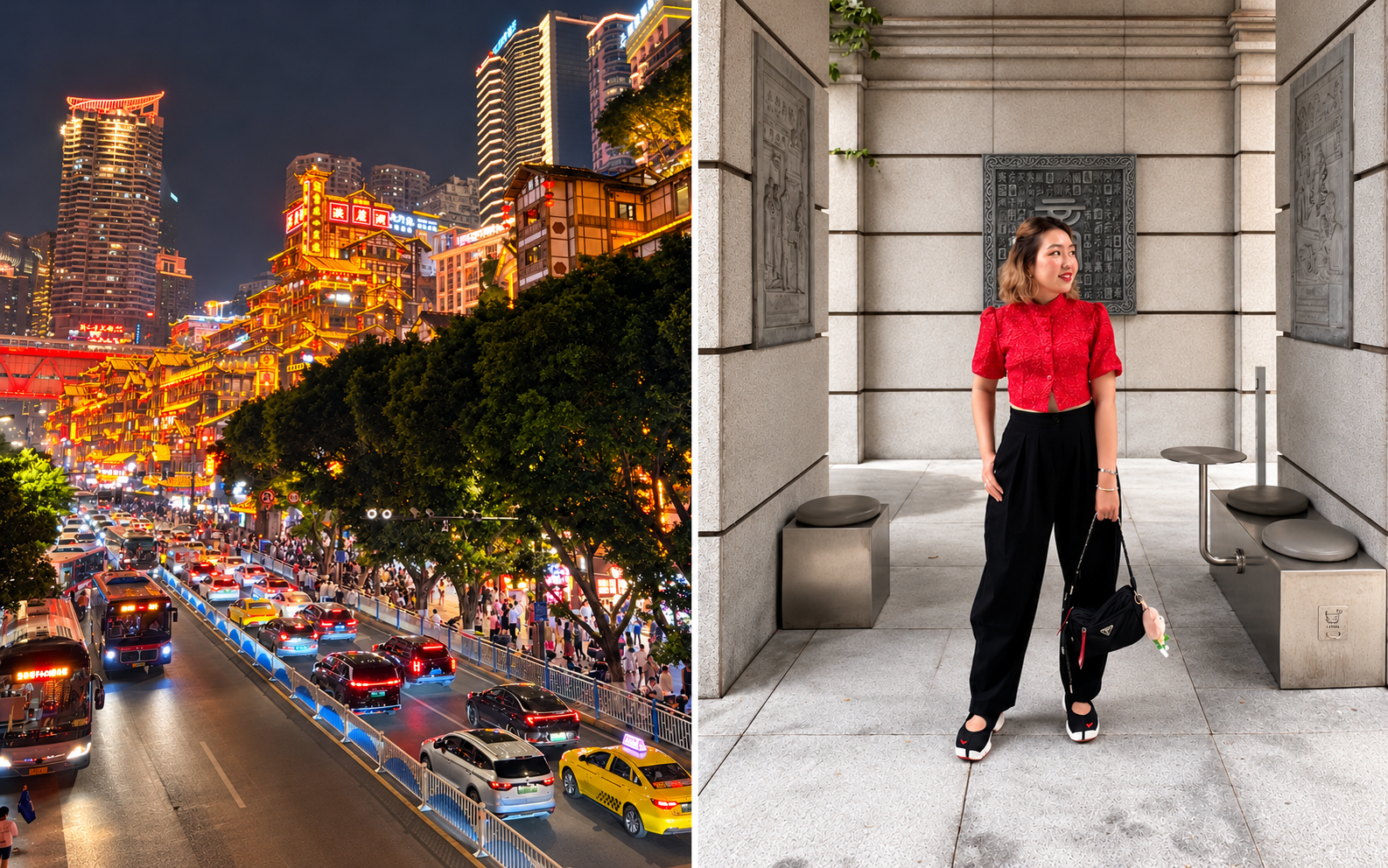
Chongqing at night: alive with traditions and high-rise buildings
Back in 2025 I returned to China with my mom, this time around to explore the splendid nature. We journeyed to Zhangjiajie only to be mesmerized by both the nature and brilliant infrastructure that affords us to see it without breaking too much of a sweat. Dramatic glass walks, towering elevators, and efficient cable trains truly wowed us.
We met friendly people despite our limited Mandarin, and I noticed how clean many of the places we visited were. But some of the moments that stayed with me were much smaller. Walking around town, I saw young people practising opera, street vendors selling traditional toys, and older people keeping up their exercise routines in parks. Alongside the massive new buildings and increasingly digital everyday life, these familiar cultural practices still had their place. I could feel that connection to culture in the way people spent their days.
In 2026, I was invited to Suzhou International Entrepreneurship Week, where I saw another side of the country: its ambition to develop local businesses and talent, and to attract international participation. AI was a prominent part of that vision. One concept presented was the “one-person company”: a business run by an individual with support from AI tools and agents. It made me wonder how much the experience of building a business could change when one person has access to capabilities that would usually require a team.
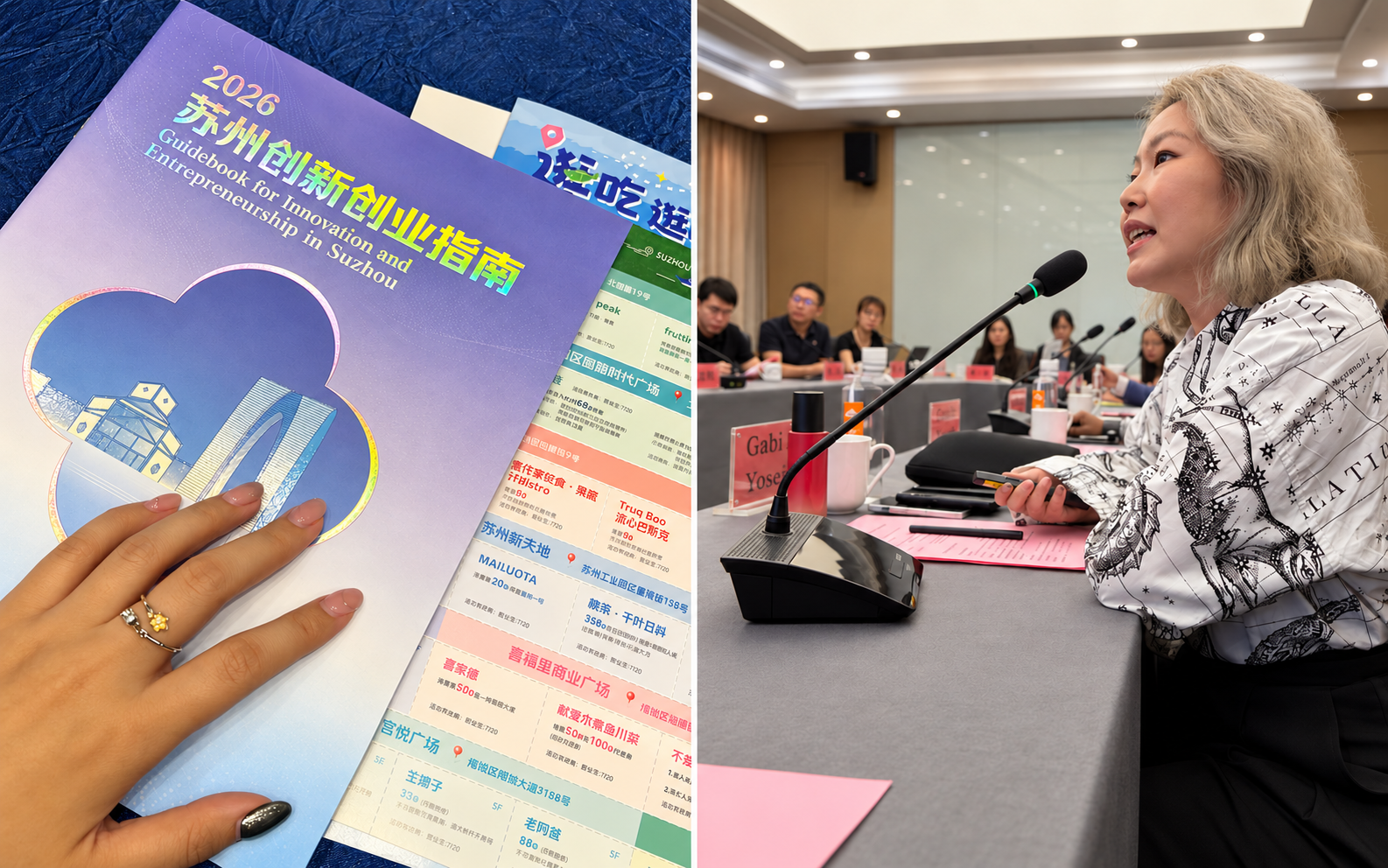
During Suzhou International Entrepreneurship Week
Interestingly, they still incorporated history and cultural destinations at each city in Suzhou municipality in their event handbook. In the closing event a handful of young Chinese faces with their different personas sang a hymn-like song. Watching them, I felt as though the initiatives we had been introduced to were being given a human face. These were the people who would inherit that future, and help shape it.
Shanghai offered another view of this development. Robots were a recurring sight, and so much of daily life happened through apps. At times, I felt there were fewer reasons to interact with another person. Yet in the small exchanges I did have, I still experienced warmth and friendliness from the locals.
These trips gave me glimpses of a country far more varied than the impressions I used to hear about it. What stayed with me was the way technological ambition, infrastructure, and cultural identity appeared alongside one another.
There is something here for other places to learn from: how to make room for development while keeping culture present in everyday life. From the opera practice I passed in town to the cultural destinations in an entrepreneurship handbook, those details shaped my experience as much as the impressive buildings and technology did.
